Technical Thought Leadership · LinkedIn Content
When Repeated Repairs Point to a Bigger Problem
A technical LinkedIn content project focused on equipment reliability and root cause analysis in manufacturing.
The project translates a familiar maintenance challenge into a structured professional post and supporting carousel, highlighting the importance of investigating recurring failures rather than repeatedly replacing components.
Author details withheld for privacy.
LinkedIn Content
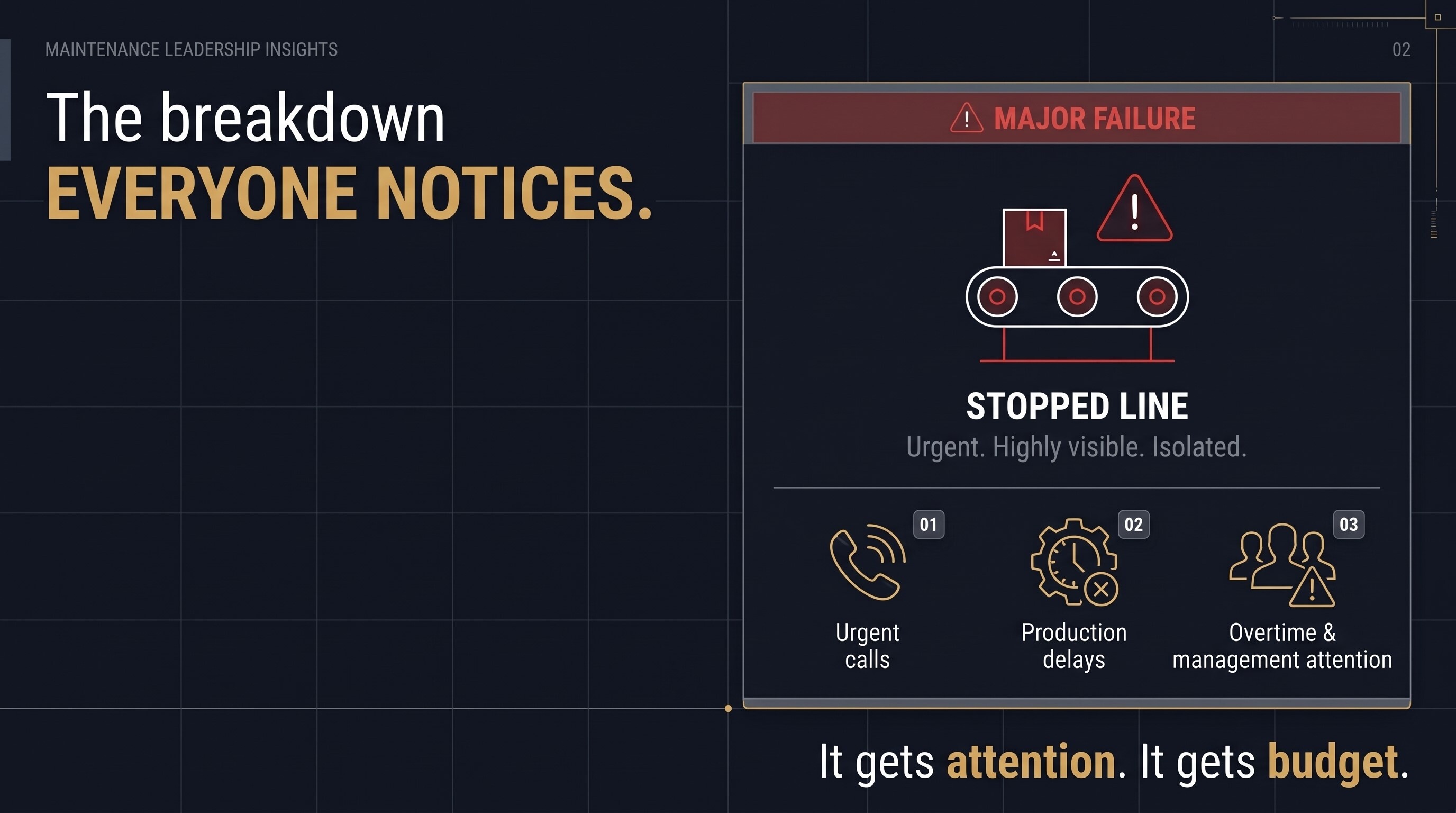
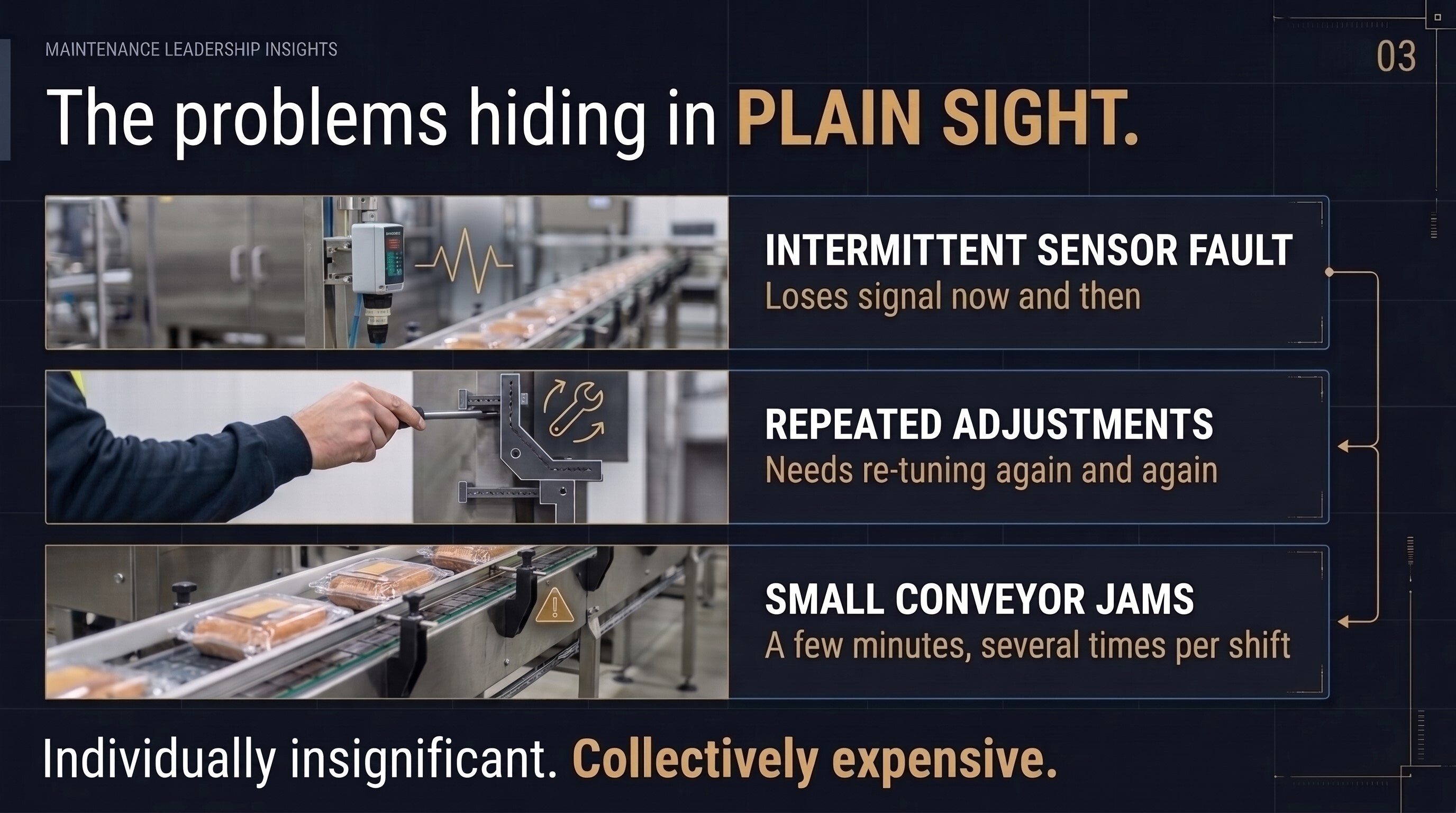
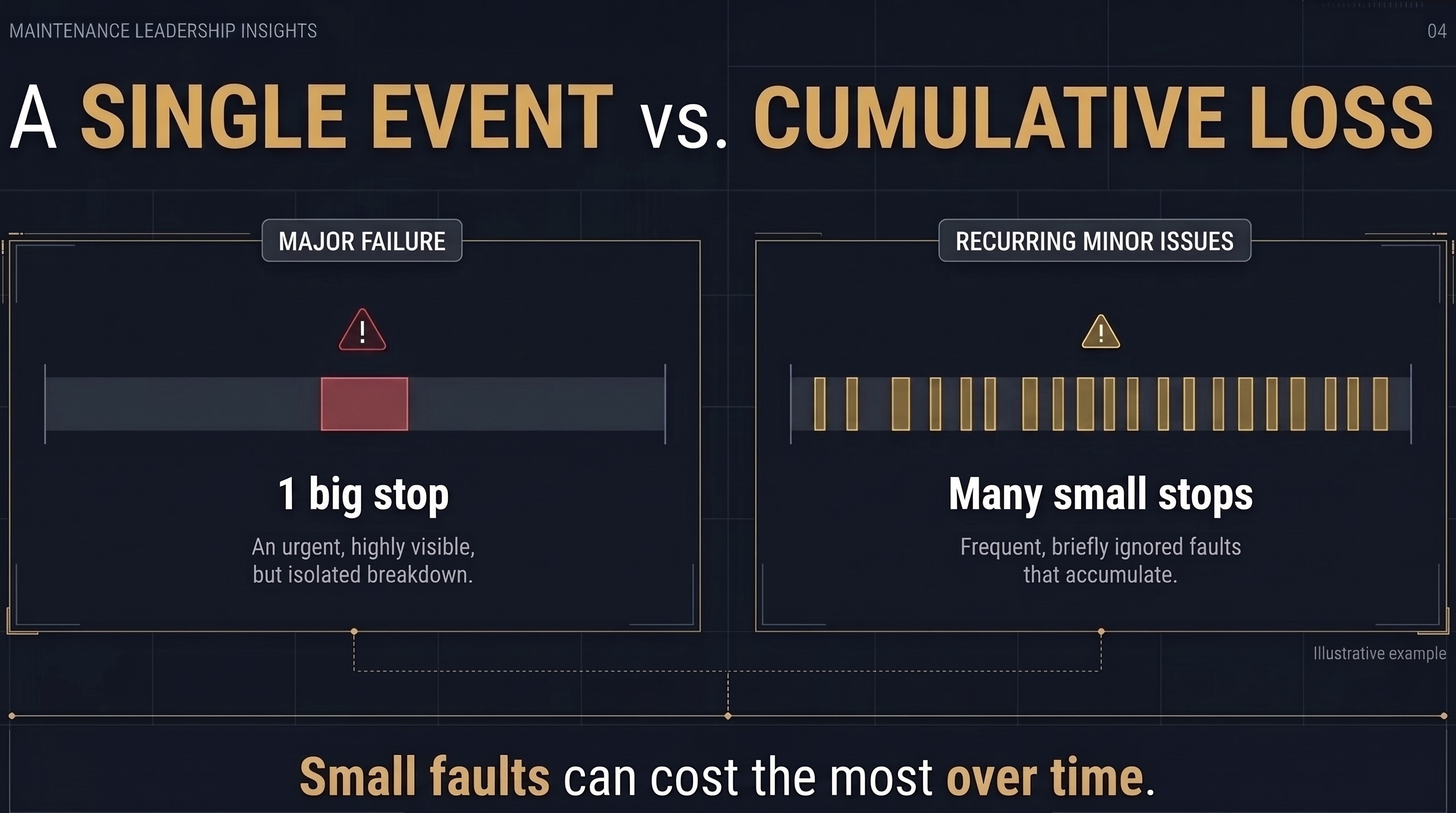
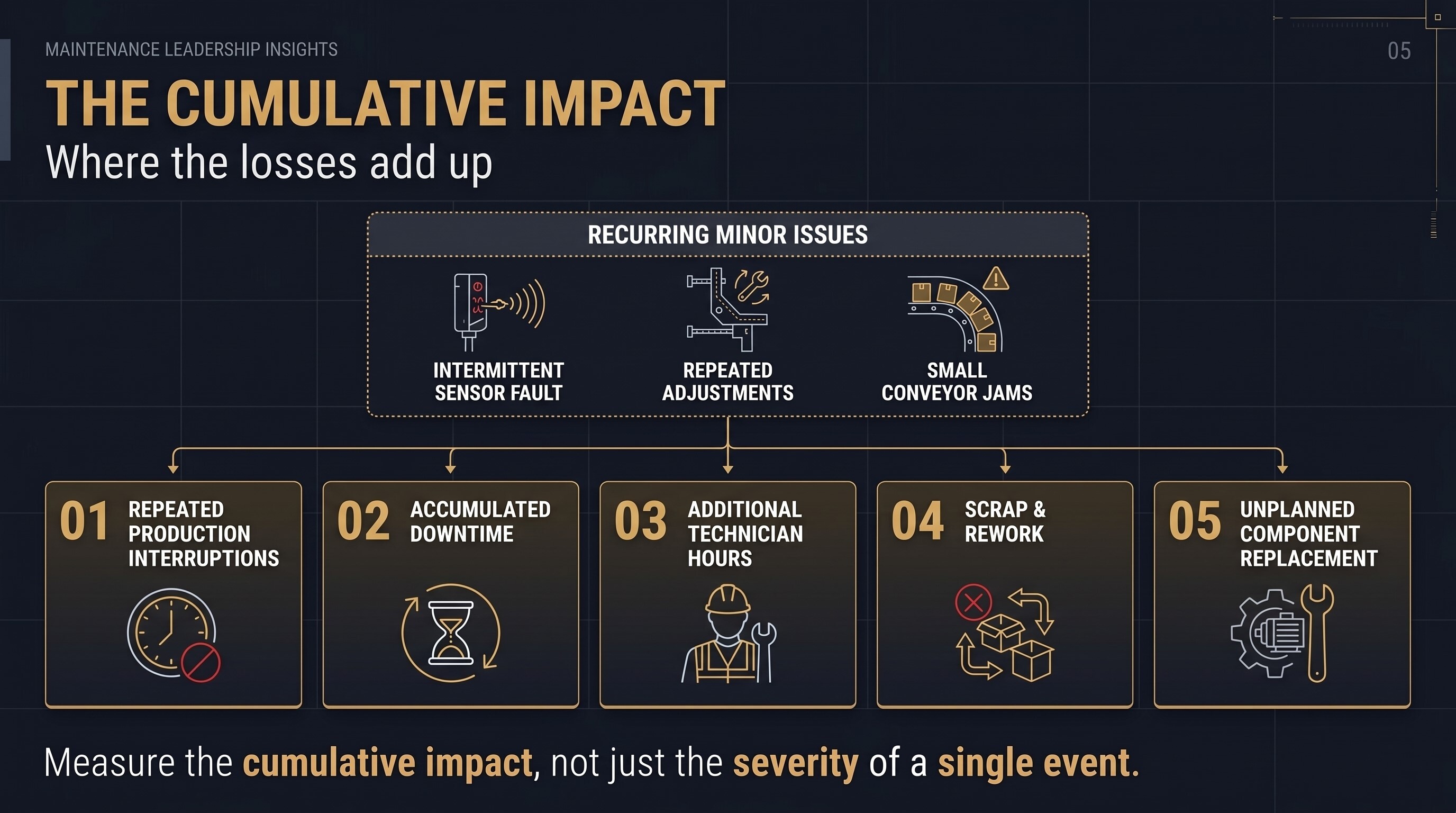
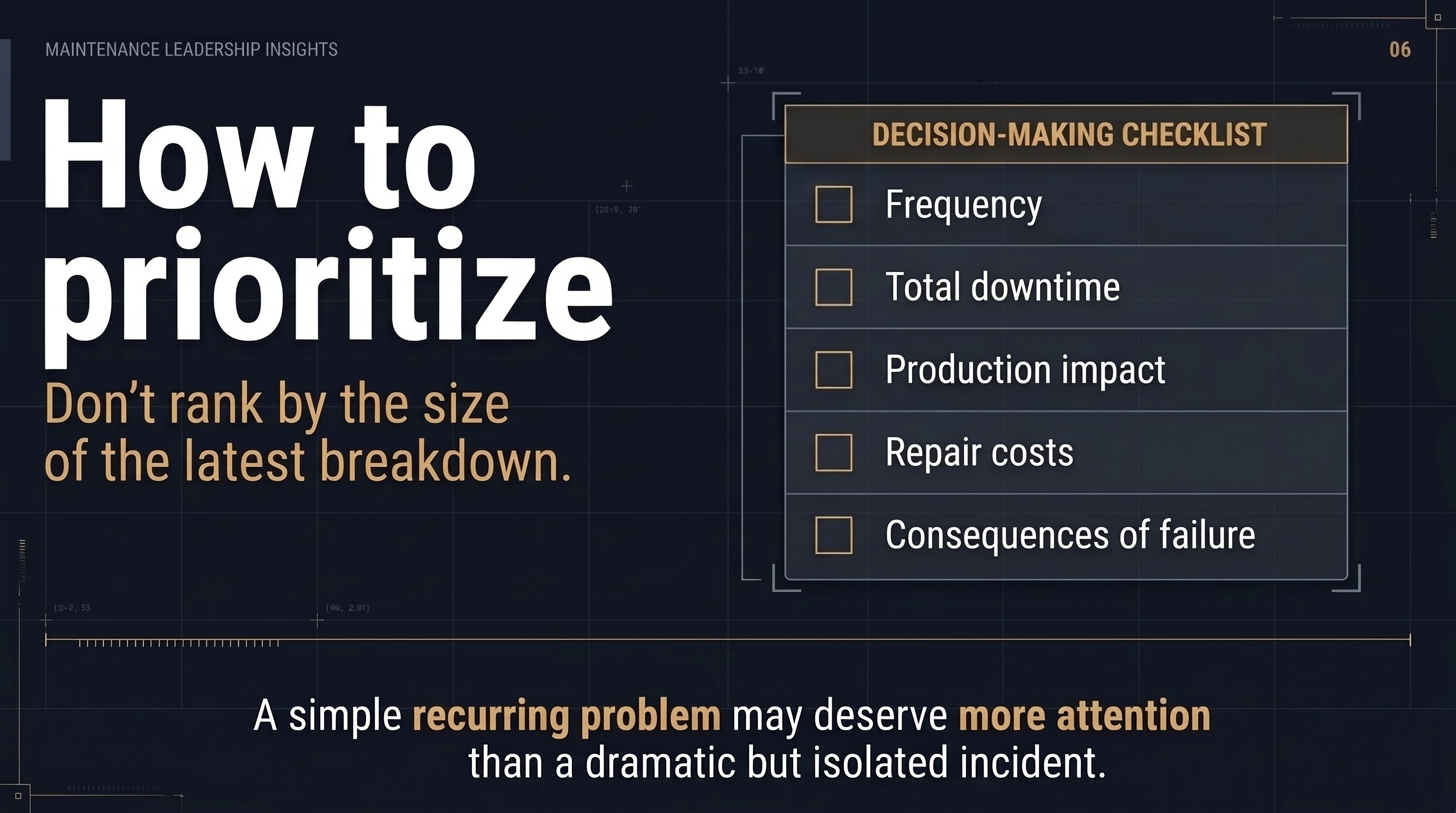
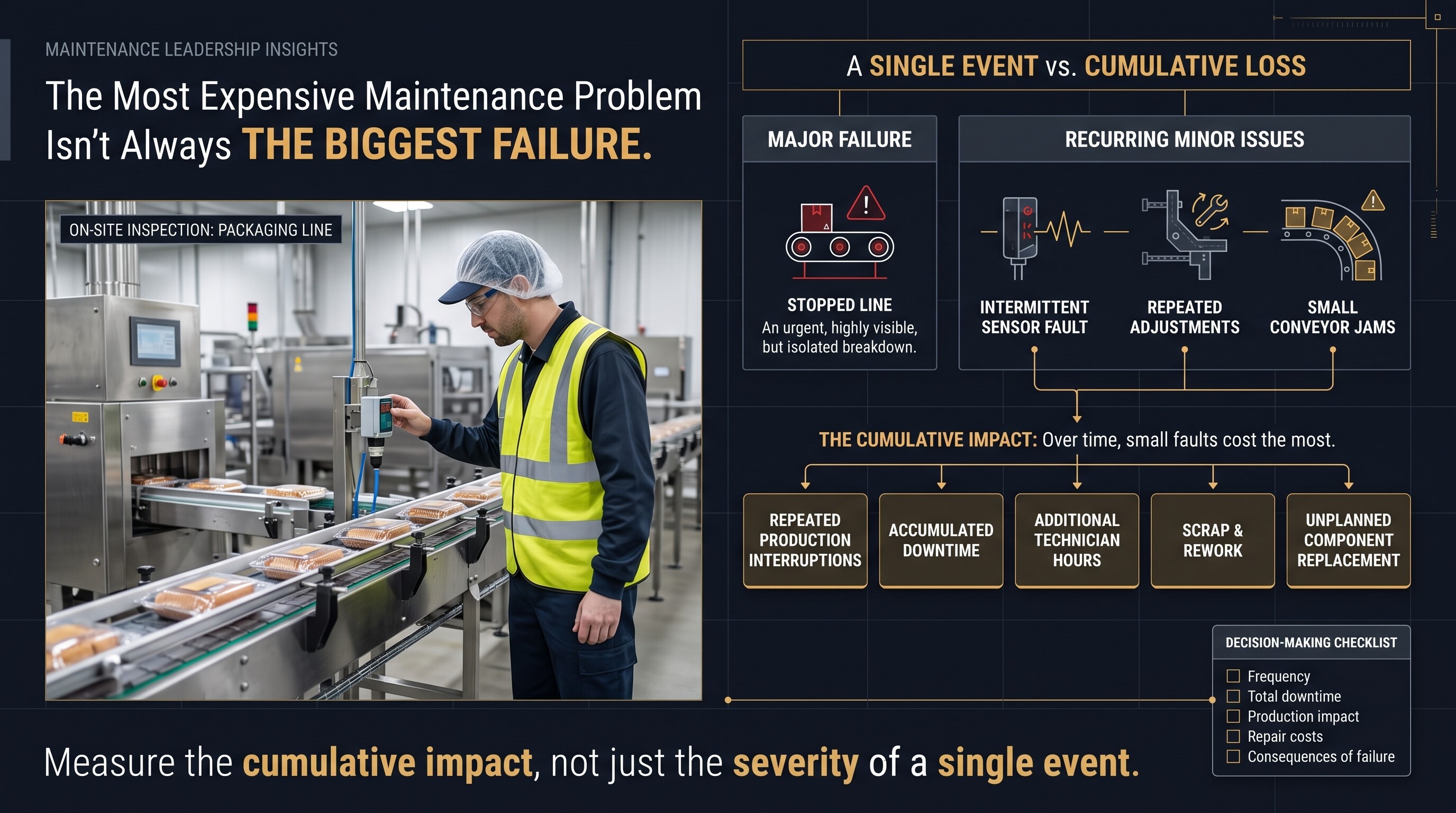
The post and its supporting carousel, shown as they appear in LinkedIn.
Technical Thought Leadership
If you’re replacing the same component for the third time, the component may not be the real problem.
Repeated replacement can create the illusion of progress.
The machine is down. The part is replaced. Production resumes.
Until the same failure happens again.
At that point, the right question isn’t simply which replacement part to order. It’s what keeps causing the part to fail.
Depending on the equipment, possible causes include:
- Misalignment or excessive vibration.
- Incorrect operating conditions.
- Lubrication problems.
- Electrical or control issues.
- Excessive loads or process variation.
- Installation errors or an unsuitable component specification.
The important step is to investigate the evidence rather than assume the cause.
Review failure history, inspect the surrounding system, compare operating conditions, and document what changes after each intervention.
If the same failure keeps returning, treat it as a reliability problem—not an isolated repair.
Replacing a failed component restores the equipment.
Understanding why it failed is what creates a lasting improvement.
A replacement part is a solution only when it addresses the actual cause of the failure.
#RootCauseAnalysis #EquipmentReliability #MaintenanceEngineering #PredictiveMaintenance #Manufacturing


My Role & Content Development
I developed the LinkedIn post and supporting carousel as a coordinated content piece for a technical professional audience.
The content was structured around a clear progression: a recurring maintenance problem, possible contributing factors, an evidence-based investigation approach, and a practical takeaway.
The carousel was designed to complement the post by presenting the central idea visually, giving the audience another way to engage with the topic.
My Contribution
- Topic Development
- Post Writing
- Content Structuring
- Carousel Design
- Publication Preparation & Scheduling
Skills Demonstrated
Technical Content Writing
LinkedIn Thought Leadership
Content Repurposing Across Formats
Carousel Design & Visual Communication
Content Scheduling & Production Coordination